Blog

Curated content for people who care about data

Looking for the latest data insights, Matia news, and more? You've found the right place.

How Genius AI Migrated Complex Data Pipelines to Matia in a Few Weeks

Genius AI had its most complex data pipeline running on Matia in 24 hours, then moved pipelines from Postgres and external sources over a few weeks.

‍

Genius AI's data stack was assembled over 10 years from a mix of vendors, and it was hard to maintain. Brady Allchin, VP of Engineering, wanted the team to deliver a reliable data pipeline to stakeholders inside and outside the company.

24 hours for the most complex pipeline, a few weeks to migrate

"We knew within 24 hours it was the right decision"

Their largest, most complex pipeline was up and running on Matia within 24 hours.

The broader migration took a few weeks. That covered pipelines from internal Postgres stores and external data sources. "

The timeline to migrate to Matia really did surprise me"

Time goes back to the business

Moving to Matia streamlined Genius AI's stack and saved money. It also changed how the data team spends its time. "It now goes to supporting the business instead of keeping our pipelines alive."

Lineage catches upstream changes

Matia's data lineage alerts the team when another part of engineering changes one of their data sources, before it causes a reliability problem for the analytics team. Teams in every department get data on a tight SLA, refreshed and up to date, so they can run the reports they need.

"If you're a data leader and you want to take your team from reactive work to one that's proactive and enabling the business, Matia is the partner that enables you."
Read more

Editor's pick

Blog
Product Updates

Matia Adds Sigma to Its Data Catalog

Matia's Catalog now connects to Sigma. Trace any Sigma workbook, element, or column back to the Snowflake tables behind it.

Today, Matia is launching Sigma in the Catalog.

Connect Sigma, and your workbooks, elements, and columns show up in Matia with lineage back to Snowflake. When a number in Sigma looks wrong, you can see where it came from. Before you change a Snowflake column, you can see which workbooks use it.

Sigma joins Metabase, Tableau, Omni, Hex, and Power BI all in one lineage graph in Matia.

What's New

What’s included:

  • Sigma assets: folders, workbooks, reports, data models, datasets, elements, and columns
  • Element lineage: which elements each element pulls from
  • Snowflake lineage: which Snowflake tables each Custom SQL element queries
  • Column-level lineage: Custom SQL and column formulas read, and each column links to the Snowflake columns or element columns it uses
  • Formulas and data types: each column shows its Sigma formula and type

Why It Matters: Lineage No Longer Stops at the Warehouse

Sigma workbooks are built in layers. One element pulls from another. Custom SQL pulls from Snowflake. Column formulas reference columns in other elements.

Without lineage into Sigma, someone traces those layers by hand when a number looks wrong. And when a Snowflake column changes, nobody knows which workbooks break until someone opens one.

Six BI Tools, One Lineage Graph

Most data teams run more than one BI tool. Matia's Catalog covers six, and they all sit in the same lineage graph.

Matia also runs ETL and Observability, so lineage goes past the warehouse:

  • Back to the source: when your data moves through Matia, a Sigma column traces through Snowflake and dbt to the system it came from.
  • Before a change: when Matia detects a schema change in a sync, lineage shows which Sigma workbooks sit downstream.
  • In your AI tools: ask Matia MCP which Sigma workbooks a table change will affect.

What Teams Use It For

No matter where you sit in the data org, you can benefit from Snowflake/Matia lineage capabilities.

  • Data engineers: see which Sigma workbooks use a column before changing it
  • Analytics engineers: show where a number came from without reopening every element.
  • Heads of data: one catalog across all your BI tools

Already on Matia? Connect Sigma from the Catalog.

New to Matia? Book a demo to see lineage across Sigma and your other BI tools.

Product Updates
Case Studies

Sync PlanetScale to Your Data Warehouse with Matia

Teams choose PlanetScale so they don’t have to manage MySQL servers themselves. The data in it still needs to reach the warehouse for reporting, models, and the business tools that depend on it.

Because PlanetScale manages the database for you, syncing changes works differently than it does on a self-managed MySQL server. Standard MySQL change data capture reads the binary log, which you’d normally configure on the server yourself.

PlanetScale streams through VStream, the change stream built into Vitess. To sync incrementally, a connector needs to read from VStream. Without that, keeping the warehouse current means reloading full tables.

Once the data lands in the warehouse, teams need to know whether it’s current, catch schema changes before they break a report, and trace a bad number back to its source. In most data stacks, each of those is a separate tool. In Matia, they’re part of the same platform.

Why we built it

This connector started with a customer. A team running PlanetScale as its primary database wanted to move to Matia, and syncing that database to their warehouse was the one thing in the way. It wasn’t on our roadmap for the quarter, but we like to build quickly when our customers are asking. We added it, built incremental sync on VStream, and now it’s shipped.

We built the connector ourselves, and we support it ourselves. If a PlanetScale sync needs attention, you talk to the same team that runs the rest of your pipeline, and they respond in minutes.

What we built

Matia now supports PlanetScale as an ETL source, along with self-hosted Vitess. The connector reads row changes directly from VStream, so incremental syncs work on PlanetScale the way change data capture works on MySQL. The connector supports:

  • Full refresh, including views and tables without primary keys
  • Incremental sync through VStream
  • Column hashing for sensitive columns
  • Automatic exclusion of system schemas and Vitess internal schemas like _vt

Why it matters

Setup doesn’t require any changes to your production database. You create a read-only password in PlanetScale, and that one password covers both the initial sync and every incremental sync after it.

Incremental syncs load only the rows that changed, so you aren’t reloading full tables to keep the warehouse current. Our post on CDC vs. ETL explains when each method fits.

Because Matia brings ETL, Reverse ETL, Observability, and Catalog together in one platform, the pipeline that syncs your PlanetScale data is the same one that monitors it, traces it, and sends it to the tools your teams use:

  • Observability monitors the sync for schema changes and data quality issues, with alerts in Slack.
  • The Catalog traces lineage from your PlanetScale tables through the warehouse and out to business tools, down to the column.
  • If you send that data back out with Reverse ETL, a failed check can stop the sync before bad data reaches those tools, when configured to do so.

When a number in a report looks wrong, you can trace it back to the PlanetScale table it came from, in the same place you set up the sync.

That context also reaches the AI tools your team already uses through Matia MCP. Your AI assistant can look up a PlanetScale table, trace its lineage, check why a sync failed, and see what a schema change affects downstream. It works under each person’s existing Matia roles, so the assistant can only see what that person can see.

Every source you connect adds to that record. Run history, monitors, and lineage for PlanetScale sit next to the rest of your data. When a number looks wrong, your team or an AI assistant can trace it back to the source and fix it in one place.

How to set it up

In the PlanetScale console, create a read-only password on the branch you want to sync, usually your production branch.

In Matia, add a MySQL connection and choose Vitess as the server type. Enter the host, username, and password from PlanetScale, keep the default VStream port of 443, and set the keyspace to your PlanetScale database name.

Each connection syncs one keyspace, so a sharded database with several keyspaces needs a connection per keyspace. SSH tunneling isn’t available yet for PlanetScale or Vitess, so connect directly.

For self-hosted Vitess, point Matia at your VTGate gRPC port and keep full row images enabled, which is the Vitess default. The setup guide covers both.

Get access

The PlanetScale connector is available now for Matia customers. See the MySQL connector docs to get started. If you’re new to Matia, book a demo and we’ll walk through it with you. If you have questions during setup, our support team responds in minutes.

Blog
Product Updates

Matia Lineage Now Runs Through Your Snowflake Transformations

Matia now traces lineage through transformations you run inside Snowflake, including stored procedures and dynamic tables. Through Matia MCP, Cortex Code (CoCo) and Cortex Agents can use it too.

It's rolling out now for Snowflake Enterprise edition and above.

Snowflake transformations in Matia lineage

A lot of data teams transform inside Snowflake. A stored procedure merges yesterday's orders into a reporting table. A dynamic table keeps a daily revenue rollup fresh. Until now, those steps were a gap in Matia's lineage graph. You could see the table a procedure wrote to, but not how the data got there.

Matia now reads lineage directly from Snowflake Horizon, with no SQL parsing on our side. Each transformation shows up as its own node between the tables it reads and writes. Column-level edges run through it, so you can follow a single field from source to output. Views and dynamic tables get their own badges, which makes a transformation output easy to tell apart from a plain table.

Impact analysis runs through these nodes too. Change a source table and Matia shows what sits downstream, including everything the procedure feeds.

Check impact before CoCo changes a transformation

MCP is an open standard, so Matia MCP works in any client that supports it. CoCo and Cortex Agents both do.

Say an engineer asks CoCo to rewrite the procedure that builds fct_orders. Before it touches the code, CoCo can ask Matia what depends on that table. Matia comes back with the monitors watching it and the reverse ETL sync that pushes it to Salesforce. It also lists the dashboards that read from it. The engineer approves the change knowing exactly what it touches.

Matia MCP recommends. You confirm every action before anything happens.

Trace a bad answer back to its source

Now the other direction. A Cortex Agent answers a revenue question with a number that looks off. The table it queried was built by a stored procedure.

Matia follows the path back from the output table, through the procedure, to the source table and the Matia sync that loaded it. That's where it finds the freshness monitor that failed at 8 a.m. The agent gets root cause and downstream impact in one answer, instead of piecing it together from separate tools. In our testing, workflows that took an agent ten or more tool calls against single-vendor MCPs took one or two against Matia.

When a question needs live numbers, Matia calls Snowflake MCP and combines the results with its own context.

The operational layer around Snowflake

Matia is the operational data infrastructure around Snowflake. It brings ETL, Reverse ETL, Observability, and Catalog together in one Unified DataOps Platform. Data comes in reliably and gets checked before it lands. Then it goes back out to the tools your business runs on. Snowflake stays your source of truth.

Ramp runs its Postgres-to-Snowflake replication through Matia. Historical resyncs that used to take 3.5 days now take 4 hours.

Matia is available on Snowflake Marketplace. Find us there, or book a demo to see your Snowflake transformations in Matia lineage.

Product Updates

September 2026 Product Updates: Matia MCP Goes GA

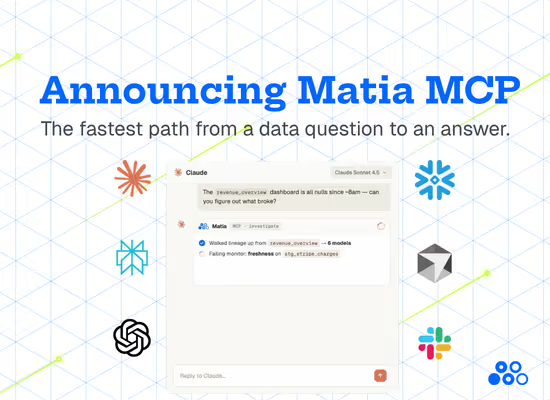
Your favorite AI tools can now ask Matia a question and get a real answer back, right from where you already work.

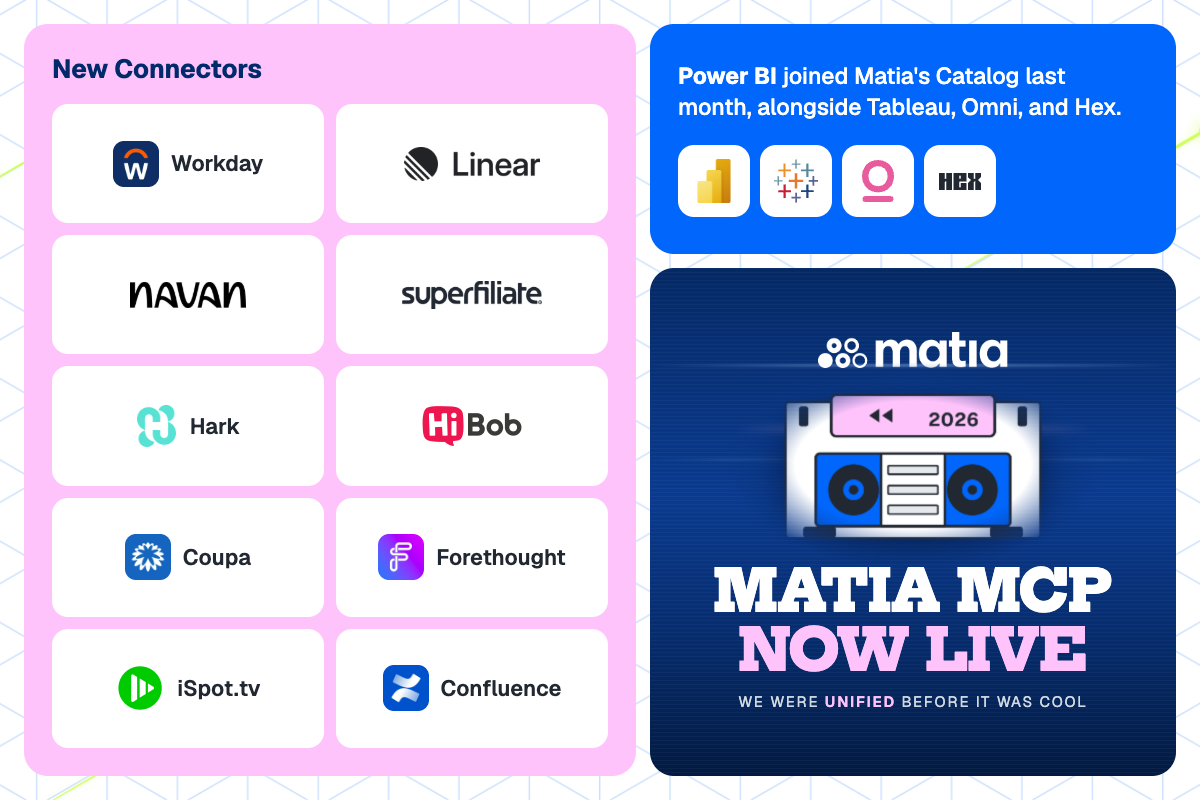
Matia MCP is now available, Power BI's lineage integration is live, and we've added new connectors to bring even more of your stack into one place.

Our goal is to help you unify your data stack, cut tool bloat, and make it simple to see what's broken, where it started, and how to fix it. This month's releases do exactly that.

Matia MCP Is Live

Plenty of companies are now using an MCP to bolt their tools together after the fact. Matia didn't have to. Our platform was unified from day one: ETL, reverse ETL, observability, and catalog in one place. This month, we launched Matia MCP, which is now available to any customer. Because Matia MCP sits on top of the unified platform, it’s not calling four separate data tools, which means less room for error and more accurate information in one central place.

What the Matia MCP does:

  • Traces downstream impact: Follow a failing connector through the transformation and the sync to the dashboard it breaks, all in one conversation
  • Find root causes: Ask about your broken dashboard, and it traces back to the source so you know where the issue started
  • Flags what's at risk: Ask what a change will affect before you make it, so you see the impact before you decide
  • Waits for your approval: Matia surfaces the recommendation. Running a sync or toggling a monitor still needs your confirmation, every time.

Matia MCP has rolled out to our customers now, connecting through OAuth with permissions enforced by RBAC, so your agent only sees what your own system access already allows.

Read the full launch post for how it works and what teams are already doing with it, or go straight to matia.io/mcp to book a demo to see it live.

Power BI Lineage Is Live

Power BI joined Matia's Catalog last month, alongside Tableau, Omni, and Hex. Once you connect a Power BI workspace, Matia picks up:

  • Descriptions. Asset descriptions carry over from Power BI, so you don’t redocument what a report already explains
  • Lineage. Native Power BI lineage traces relationships between datasets, reports, and dashboards down to the column level, running upstream through Snowflake and Databricks so you can follow a column back to where it started
  • Usage. Usage metrics land in the Catalog's usage tab, so you can see what's actually being read, not just what exists

Read the full Power BI lineage post for what that looks like in practice.

New Sources Pull Data From

  • Workday HCM: Worker records, positions, payroll, and org structure sync straight from Workday, so HR reporting doesn't mean a manual pull every time
  • Superfiliate: Affiliate, influencer, and referral program data lands in your warehouse next to the rest of your marketing data
  • Navan: Travel and expense data syncs directly from Navan into your warehouse

New Destinations to Send Data

  • Linear: Push customer records from your warehouse straight into Linear, so product and support teams work from the same data without a manual sync

Want to cut your sync times by 80%, like we did for Ramp? Book a demo here.

View all
Crunching Data
Product Updates
Case Studies
Blog

Matia MCP moves from private preview to general availability, plus new connectors for Workday, Superfiliate, Navan, and Linear.

Matia now streams the Postgres WAL over the replication protocol: up to 4x faster CDC on Aurora, with less load on your production database.

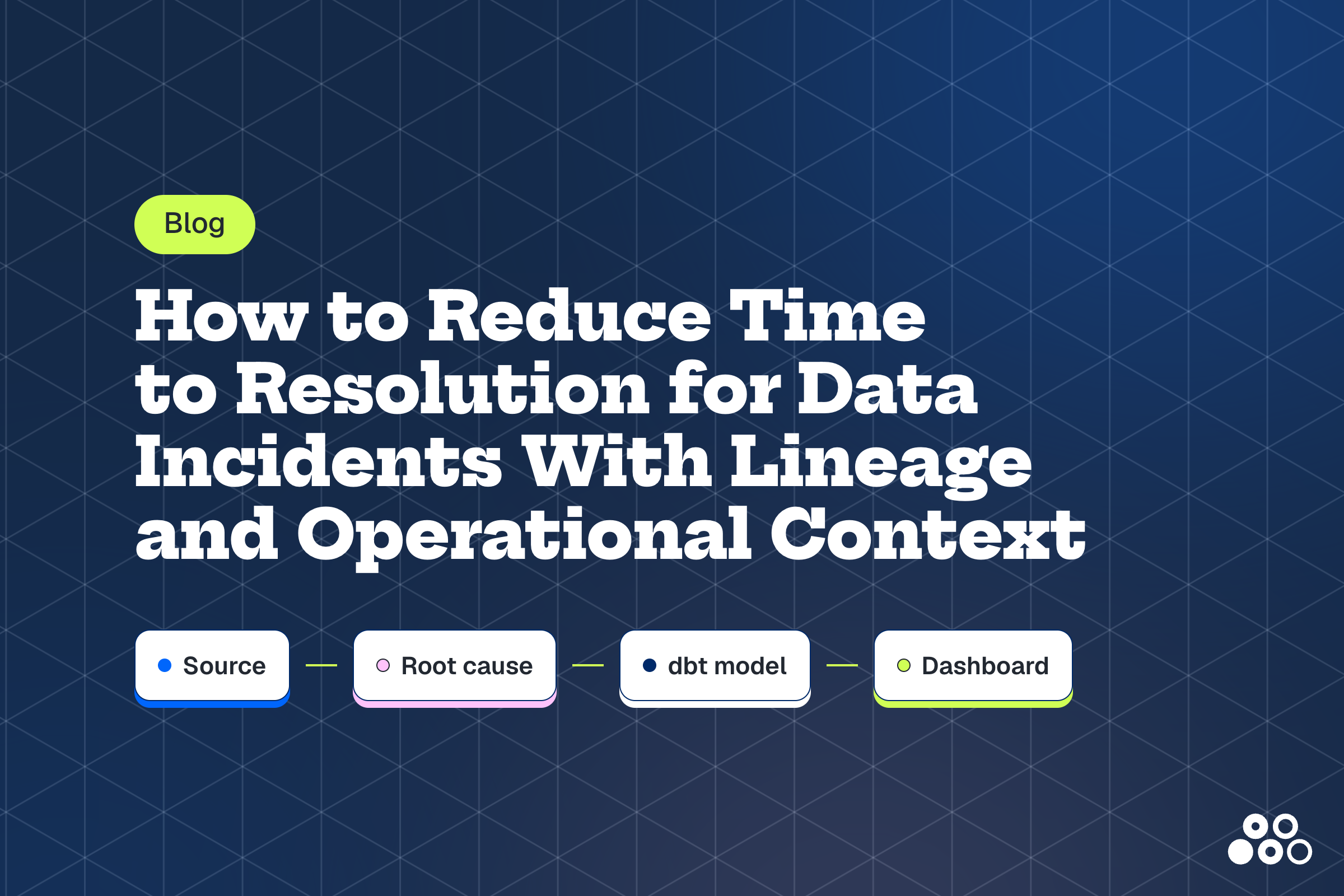
Data incidents drag on because evidence is scattered. See how lineage and operational context help teams find root cause and resolve faster.

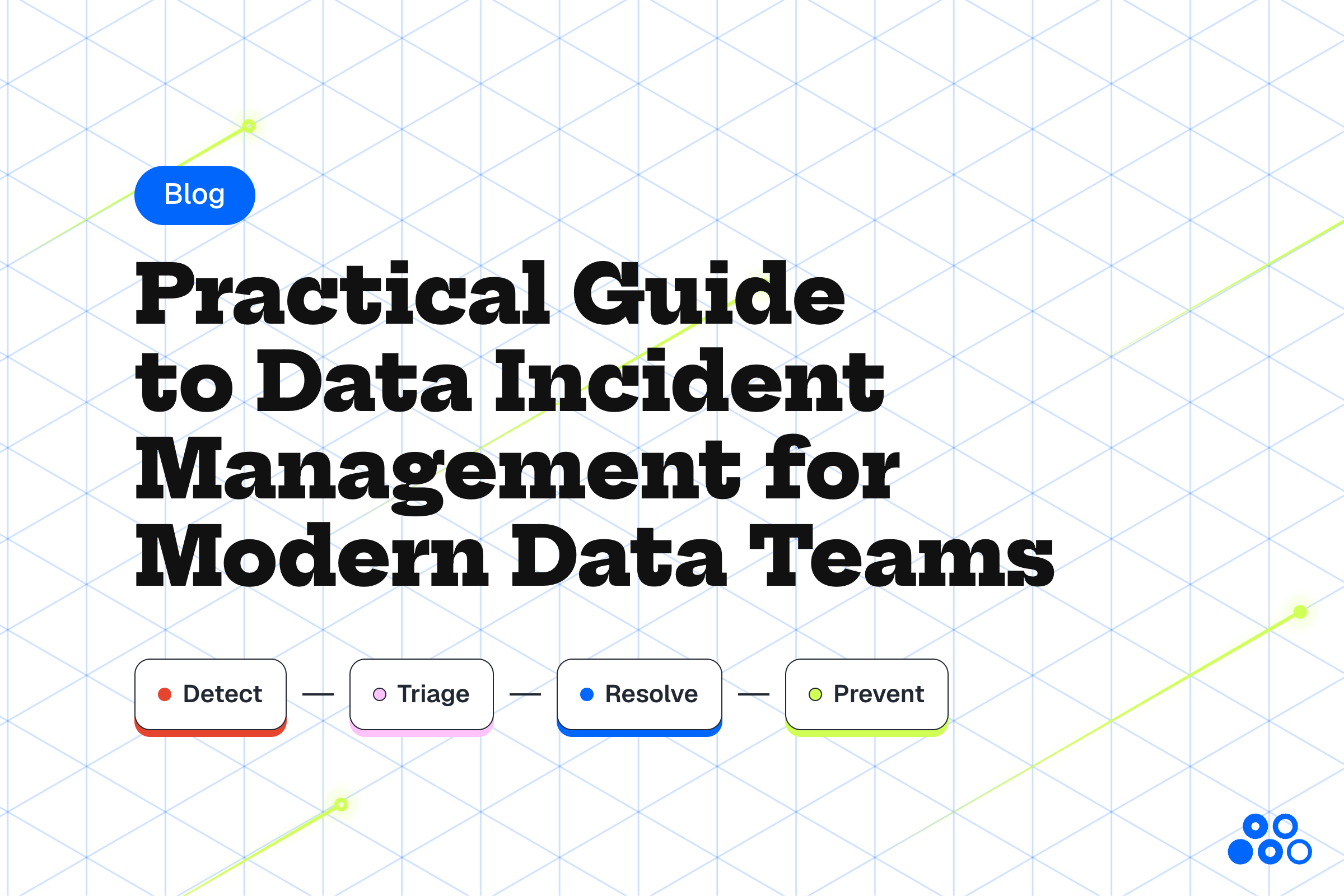
Data incidents rarely look like outages. Here's a practical process for detecting, triaging, investigating, and resolving and trusting your data.

Stale data rarely triggers an error. Learn how freshness issues quietly undermine decisions, and how to define, monitor, and act on freshness..

Monitor dbt tests, models, and pipeline health in one place. Learn how unified observability helps teams detect, diagnose, and resolve issues faster.

A software engineer’s guide to modern data engineering: orchestration, ingestion, modeling, testing, observability, lineage, and DataOps.

Stitch separate ETL, observability, and catalog tools together through an MCP and every seam is a place to go wrong. Matia MCP is unified. Now GA

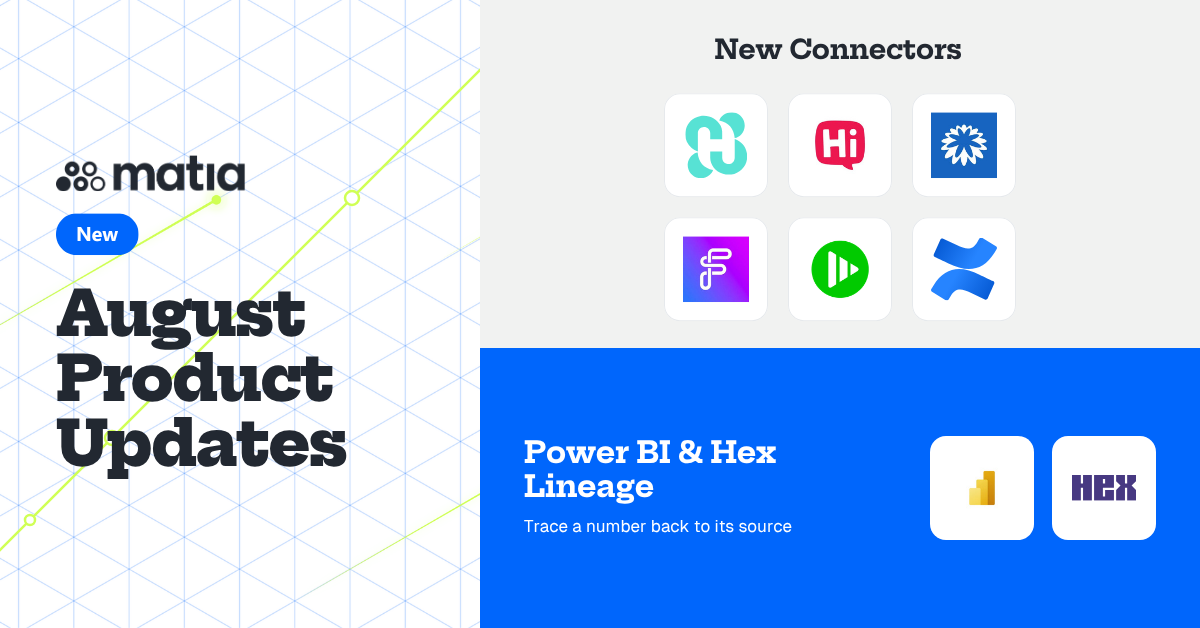
New source connectors, plus lineage into Power BI and Hex. Here's what shipped across Matia in August.

How Kiva replaced its legacy ETL provider, cut costs 25%, and migrated with zero downtime using Matia's custom Snowplow connector.

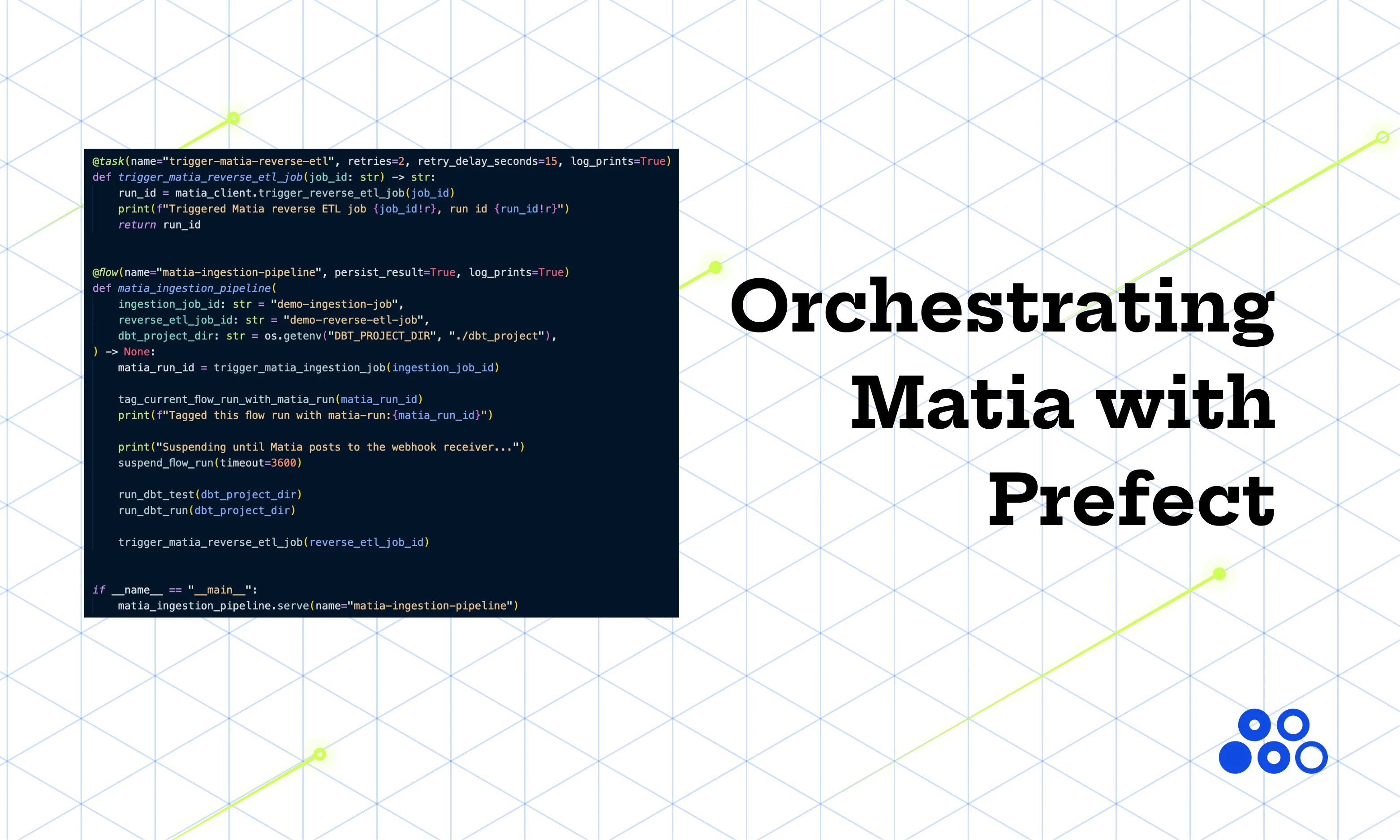
Build a reliable Prefect pipeline for Matia ingestion, webhook-based run correlation, dbt validation, transformation, and reverse ETL.

Matia's Catalog covers Metabase, Tableau, Omni, and Hex. Power BI is live, so lineage into Microsoft's BI platform traces back to the source too.

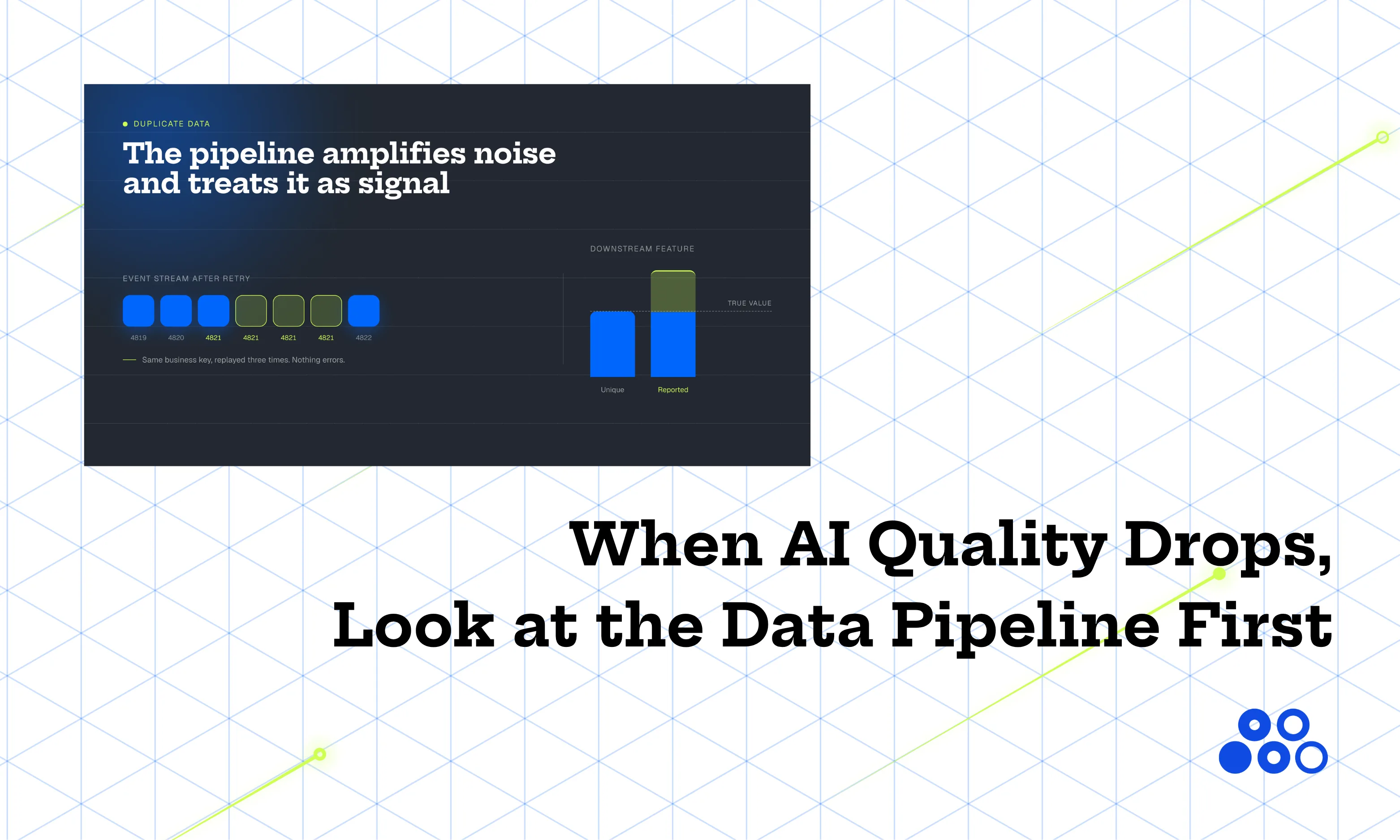
Model quality gets most of the attention in AI, but models are often not the first thing to fail in production. Often, the problem begins upstream.

Learn how to spot data pipeline failures early, assess downstream impact, identify root causes, and resolve incidents before feeling the effects.

Build a trusted data foundation for AI with governance, lineage, and security that give teams context, access control, and traceable data.

What is column-level data lineage? Learn how field-level visibility improves analytics accuracy, AI context, and data compliance.

What should you look for in a data observability platform? Evaluate coverage, alerts, root cause analysis, integrations, and total cost.

New connectors, faster activation, and tighter monitoring shipped across Matia from May through July. See what's live and what's coming next.

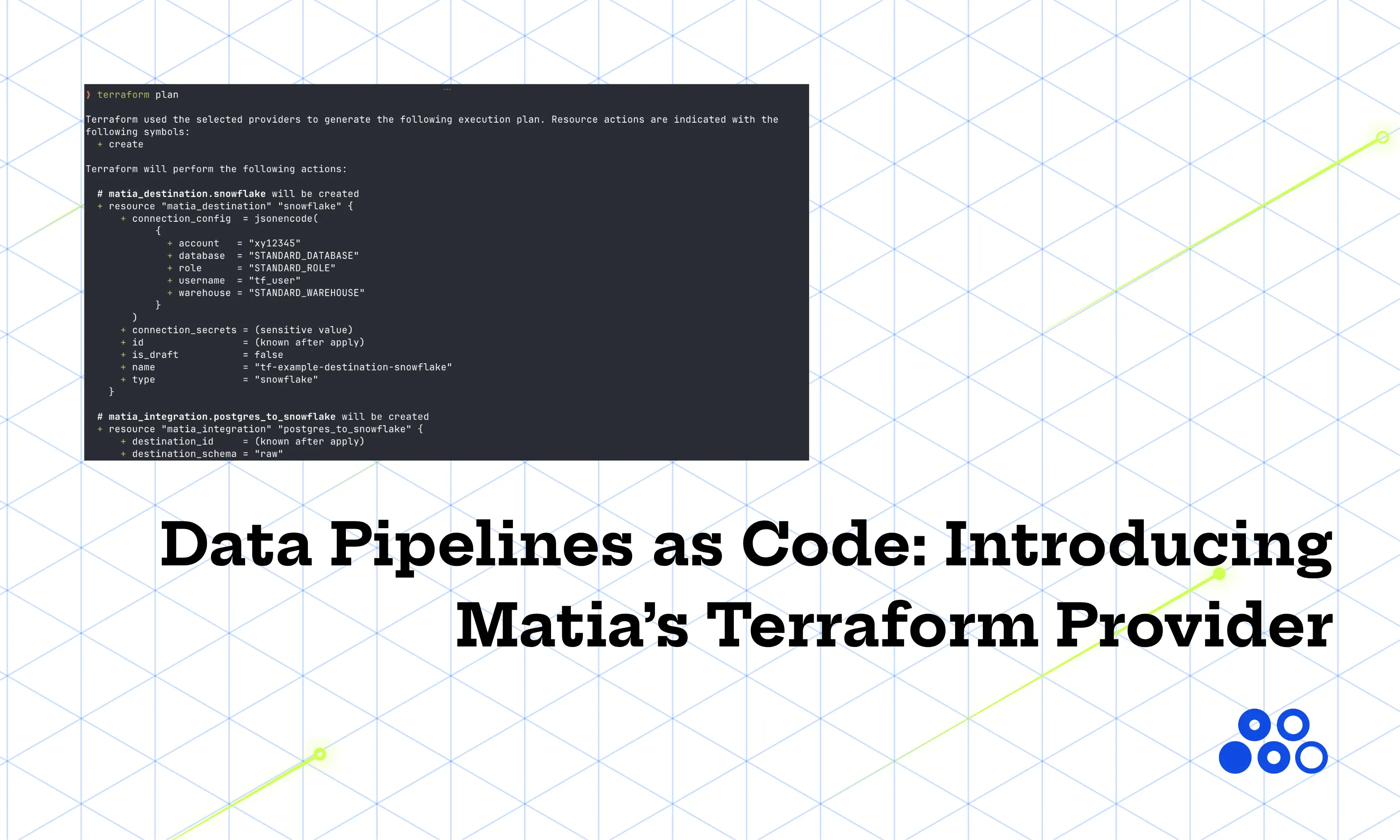
Manage Matia data pipelines as code with Terraform using practical Postgres-to-Snowflake and MySQL-to-BigQuery examples.

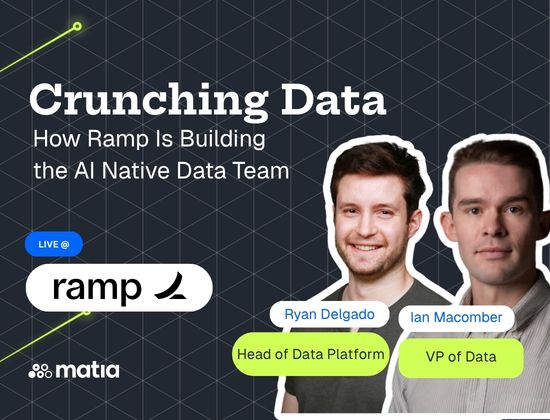
Recorded live at Ramp's NYC headquarters. Ian Macomber and Ryan Delgado on billboard units, buying vendors for slope, and why agents need paved paths.

Use this production-safe checklist to plan your cutover, validate data, and switch platforms safely.

Choosing between a standalone ETL tool and a unified DataOps platform? Use this decision framework to evaluate tool sprawl, cost, and overhead.

Open data infrastructure often leads tool sprawl. Learn how to build an open data stack without drowning in engineering overhead.

Fivetran pricing changes in 2025 and 2026 made MAR billing harder to predict.

Connector count is the wrong way to evaluate Fivetran alternatives. Here's the framework data engineers actually use.

Matia's Catalog includes Metabase, Tableau, and Omni. Hex is next, so lineage for any number, notebooks included, can be proven back to its source.

Learn how data engineers solve last-mile analytics by syncing warehouse data to Salesforce and HubSpot without brittle API scripts.

Migrate from Fivetran without rebuilding from scratch. Learn how to cut costs and create faster, more flexible data pipelines.

Frustrated with Fivetran Postgres replication slot errors and high MAR costs? Discover a better alternative for reliable, high-speed Postgres CDC.

Tour the Matia API with curl: create API tokens, control schemas, manage tags and audit logs, and orchestrate integration runs.

Compare ETL pricing models, hidden costs, and total cost of ownership to choose a predictable platform that scales with your data.

Matia is now on Google Cloud Marketplace. Buy the Unified DataOps Platform with committed Google Cloud spend and run it where your data lives.

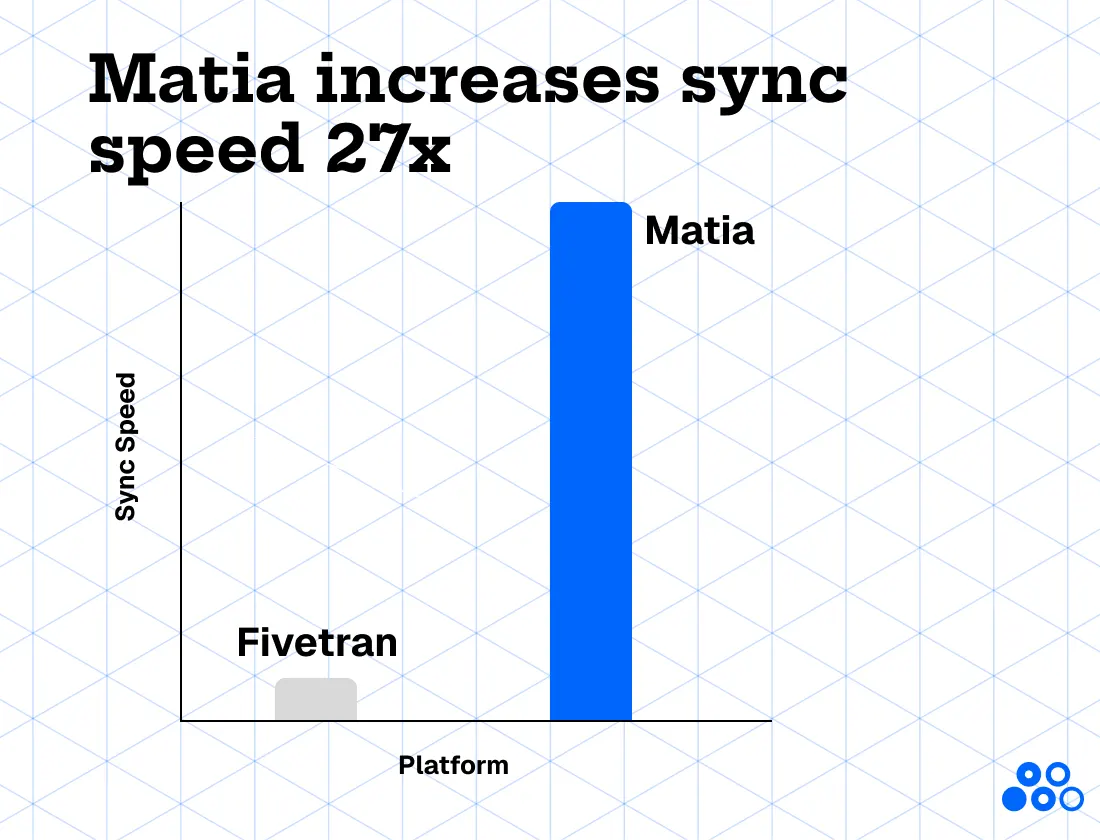
Learn how Matia’s parallel syncs accelerate data ingestion pipelines, reduce stale reporting, and lower data warehouse costs.

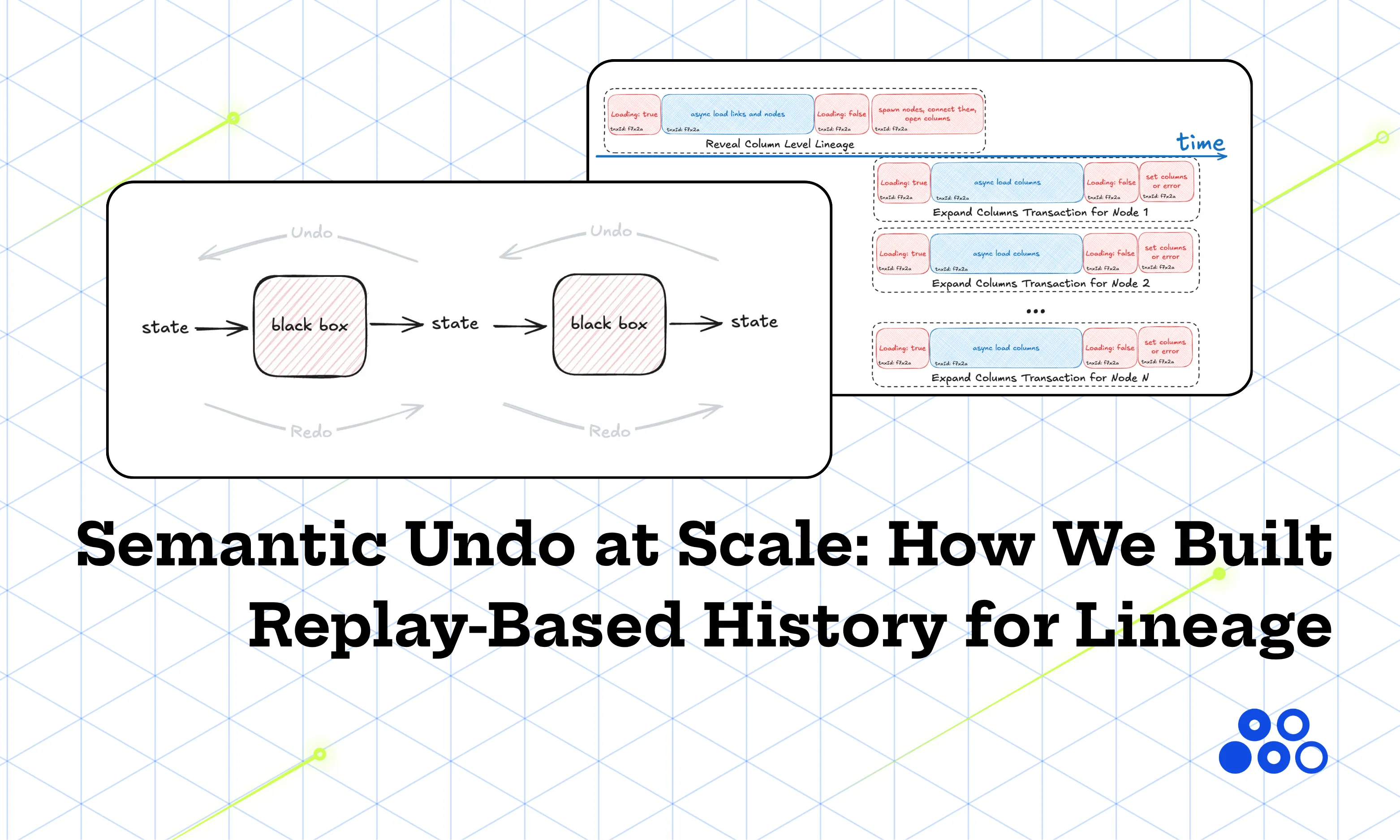
Adding undo to a data lineage canvas forced us through Memento, Command, and event sourcing — and into checkpointed forward-command replay.

ETL has powered data teams for decades, but AI, real time analytics, and operational workflows are driving renewed interest in Change Data Capture.

AI readiness starts with fresh, trusted, governed data—not just green pipelines—to safely power agents, analytics, and workflows.

Your data stack wasn't designed, it accumulated. AI doesn't fix the mess, it amplifies it. Here's what 2 data leaders do differently.

Matia's Catalog now connects to Omni, giving data teams column-level lineage from source through warehouse all the way to the dashboard.

Announced at Databricks Data and AI Summit 2026, Matia now brings Unity Catalog tags, descriptions, and lineage into the Matia Catalog and makes them

ETL vs. Reverse ETL: one centralizes your data, the other activates it. Here's how they work together to power an analytics-ready, AI-ready data stack

Matia is live on Snowflake Marketplace. Install unified ETL, reverse ETL, observability, and catalog inside your Snowflake account in minutes.
Matia MCP is now in private preview. Built on Matia's unified foundation, it gives your AI agent the full picture of your stack efficiently

AI doesn’t fail because of the models—it fails because of the data. Matia and Drata discuss silent data failures, observability, and building reliable

Matia tied Databricks for #1 on G2 Summer 2026 Momentum Grid for ETL Tools. Featured in 29 reports across ETL, Reverse ETL, and Observability.

AI fails because of data, not models. Learn why “working” pipelines still produce unreliable AI outputs.

AI won't replace ETL platforms, but it's exposing how outdated most are. Why unified, reliable data infrastructure still wins in the AI era.

Matia has been named one of Qumra Capital’s 2026 “Tomorrow’s Growth Companies,” recognizing some of the most promising growth stage tech companies.

Matia expands BigQuery support with full observability, Salesforce formula translation, and a new Reverse ETL source — all from one unified platform.

Learn how to manage dual systems, reduce tool sprawl, and optimize performance, cost, and reliability after data warehouse migration.

Learn how to execute data warehouse migration with schema translation, CDC, validation, pipeline modernization, and cutover best practices.
How Recharge cut Snowflake costs 32%, eliminated recurring pipeline failures, and unified its ETL and Reverse ETL stack with Matia

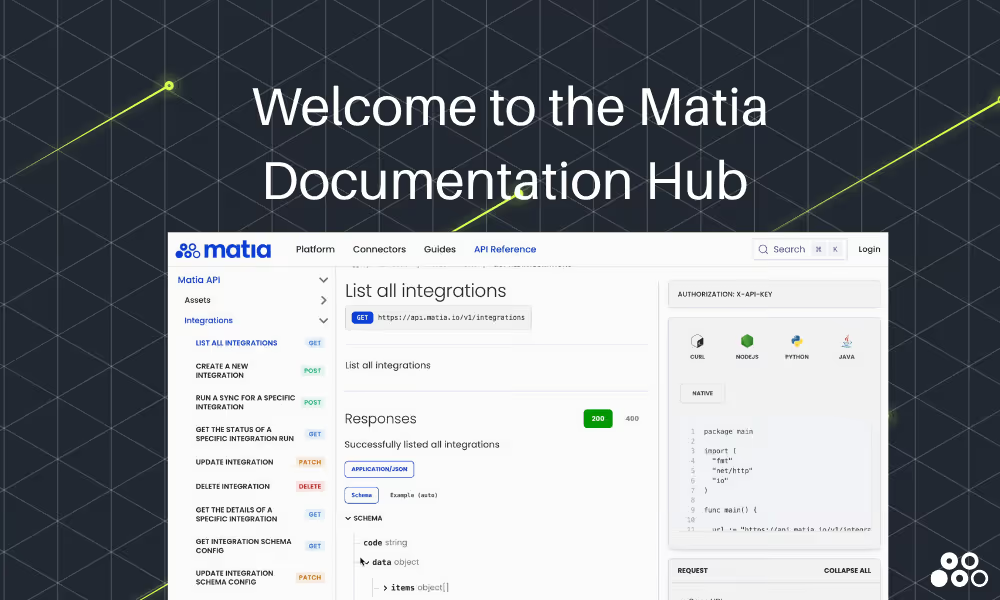
Matia launches its Documentation Hub — a centralized knowledge base with 150+ connector schemas, API references, setup guides, and how-tos.
Part one of a series on data warehouse migration. This guide covers platform selection, cost analysis, and strategies to modernize for AI and scale.

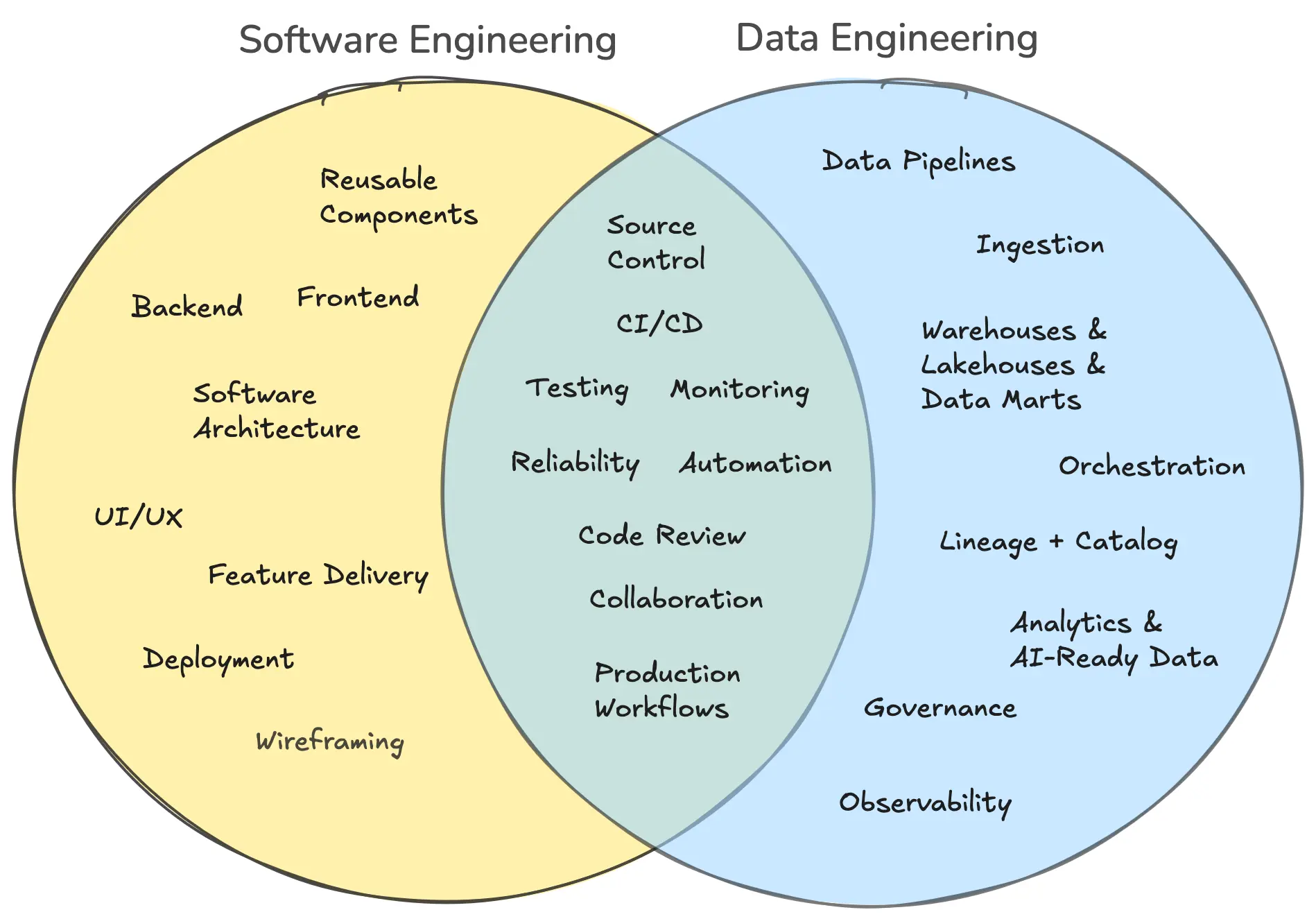
From source control to DataOps, here's what I learned moving from software engineering to data engineering, and why the gap is shrinking fast.

Spring 2026: 34 badges, 27 reports, and our first G2 recognition in Data Observability.

Matia’s native data lineage delivers end to end visibility across ingestion, models, and pipelines with unified context and impact analysis built in.

New Launch: Enterprise RBAC in Matia centralizes access control for AI-driven data teams with audit logs, role templates, and unified governance

Matia raises $21M Series A to build unified, AI-native data infrastructure for reliable AI and modern data teams.

Lopay completed a fast ETL migration in days, moving 100+ integrations with zero downtime and reducing total data movement costs by 40%.

Mitchell Cooper shows PayIt's data architecture for government payments. 38% cost cut, 85% less debugging. Live demo and technical insights.

Explore Matia's January 2026 updates: enterprise notifications, PagerDuty integration, and new connectors for reliable data operations.

New connectors for LaunchDarkly, Gainsight, & Rippling plus Jira enhancements to centralize product, customer, HR, and compliance data.

Matia launches granular notifications and PagerDuty integration, helping enterprise data teams scale observability without alert fatigue.

Complete RBAC guide for data teams: how role-based access control works, implementation roadmap, best practices for security and data governance.

Matia welcomes Ori Zviran as VP of R&D, bringing deep expertise in cybersecurity, backend systems, and scaling unified data operations.

From 10x growth to 1M+ integrations: How Matia made unified data operations real in 2025 and what's next for our AI layer.

Matia adds Okta, Mailchimp, Xero, Apple App Store, Google Play, and Email connectors to unify your data.

Automate email attachments to your data warehouse. Matia turns CSV & JSON files into query-ready data—no manual uploads needed.

PostgreSQL 18 brings 3x faster performance with async I/O, UUIDv7 support, skip scan optimization, and virtual columns for modern data workloads.

Matia’s parallel syncs speed up ETL & database replication with multi-stream data pipelines that boost performance and cut compute and warehouse costs

Matia earned 21 badges in G2’s Fall 2025 reports for ETL, Data Extraction, and Replication, proving customer trust and real data platform impact.

Explore Matia's September product updates for Snowflake governance, richer catalog insights, and new connectors for better data collaboration.

Compare the 15 best ETL tools in 2026, including Fivetran, Airbyte, and Snowflake Openflow, by deployment, reverse ETL support, and who each fits.

Step by step guide to build modern ELT with dbt + Matia: scalable SQL transformations, observability, and automated workflows for Snowflake analytics.

Reverse ETL moves data from your warehouse into tools like Salesforce and Slack so teams can act on insights without technical help

Explore Matia's June product updates: new APIs, rate limits, connectors, ML anomaly detection, webhook alerts, and simplified Snowflake setup.

Matia is now a Snowflake Select Partner—bringing faster ETL, richer metadata, and a unified data stack to teams using the Data Cloud.

Data leader 30-60 day plan with team charter, RACI chart, and project prioritization to drive early impact with data & AI

Detect and alert on schema drift in Snowflake with snapshots, impact tagging, and Slack/email alerts to protect data pipelines from silent failures.

Discover Matia's integrated data catalog and lineage capabilities for data discovery, governance, and trusted analytics across your organization.

GigaOm names Matia a Fast Mover in 2025 Radar for Data Pipelines. Unified platform, strong data quality, and fast iteration.

A 30-day ramp-up guide for new data leaders to build trust, map the stack, and drive early wins without rushing into reorgs or tool changes.

Lev powers real-time AI with Matia, syncing data from Databricks to ops systems 5x faster while cutting costs and boosting pipeline reliability.

Embed self-service data pipelines in your application with Matia Embedded. Build faster, scale reliably, and give customers data control.

Explore Matia's April 2025 product updates: new ETL sources, reverse ETL destinations, cron scheduling, and smarter schema management.

Learn how to build a Reverse ETL pipeline from Snowflake to Salesforce, compare manual vs managed approaches, and streamline GTM data activation.

Optimizing Snowflake joins with constraints improves performance & reduces costs. Learn how to use keys, clustering, and caching to optimize queries.

See Matia's product updates for smarter integrations, schema management, reverse ETL, real-time alerts, and faster global search workflows.

CDC enables real-time data pipelines by capturing database changes instantly, reducing latency, and powering AI, analytics, and scalable data architec

Matia's platform enhanced Solvento's data operations, improving data reliability, reducing sync times by 63%, and cutting warehousing costs by 20%.

Subscribe to Sync or Swim
By clicking Subscribe you’re confirming that you agree with our Terms and Conditions.