
.svg)


Announcing RBAC in Matia: Enterprise-Ready Access Control for AI-Driven Data Teams


It’s Launch week at Matia. Yesterday, we announced Matia’s Series A funding. Today, we’re releasing role based access control (RBAC).
If you're a data leader, access control is probably one of those things you think you have handled until you don't. Someone requests access to production data. You check the warehouse, the BI tool, maybe dbt. You grant permissions in three places, document it somewhere, and move on. It works, until your team scales to 50 people, you're deploying AI models that touch customer data, and you realize nobody actually knows who has access to what.
The problem compounds as organizations adopt AI. Every new model, every experimentation workflow, every pipeline creates new access requirements. Data teams become bottlenecks, fielding constant requests. Security teams lose visibility into who's accessing sensitive data. And without centralized control, every tool becomes its own access silo, making compliance audits a nightmare.
At Matia, we built our unified data operations platform with a different philosophy: access is foundational infrastructure.
If you're new to RBAC or want a deeper dive into how it works, we've written a comprehensive guide on RBAC for data teams.
RBAC Capabilities in Matia
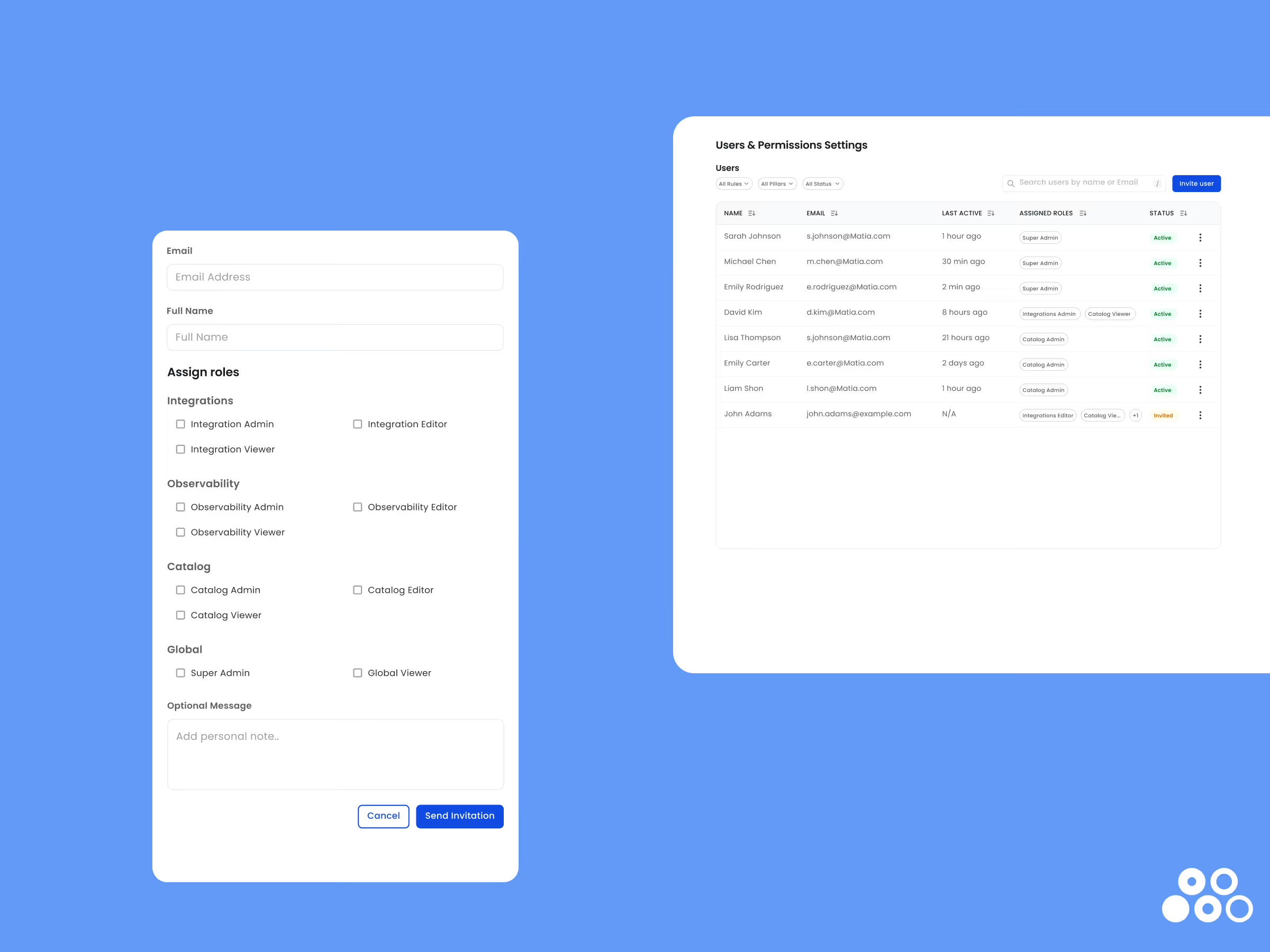
Matia's RBAC gives you centralized access management across your unified data platform. Define roles once, aligned to how your organization actually operates, not how individual tools happen to work.
Unified User Management
Manage all users in a single interface. Centralized onboarding and deprovisioning means you invite users, assign roles, and revoke access from one place in the Matia UI. No more jumping between tools to grant permissions or wondering if you've fully removed access when someone leaves.
Standard Role Templates
Matia provides predefined roles for each pillar of the platform: Integrations, Observability, and Catalog. Each role is broken down to CRUD permissions (Create, Read, Update, Delete), packaged into standard roles that reflect real job functions.
User and Role Detail Views
See assigned roles and status for any user at a glance. Understand exactly what permissions each team member has, which features they can access, and whether their account is active or pending. No guesswork, no spreadsheets tracking who has access to what.
Streamlined User Invitations
Invite new users and assign roles in a streamlined workflow. Onboarding a new analyst takes seconds: send the invite, select their role, and they're ready to work. No manual configuration across multiple systems.
Audit Logs
Track all user and role modifications with comprehensive audit logs. When your compliance team asks who changed permissions or when access was revoked, you have a complete history. Every change is logged automatically for SOC 2, GDPR, and HIPAA compliance.
Role-Based Feature Access
Users only see and interact with features relevant to their assigned roles. An analyst doesn't see pipeline configuration options. A pipeline engineer doesn't get buried in catalog metadata they don't need. The interface adapts to the user, reducing complexity and preventing accidental modifications.
API Access to RBAC
All RBAC features are available via API. Automate user provisioning, integrate with your existing identity management systems, or build custom workflows. Programmatic access means RBAC can scale with your organization's automation requirements.
Real-World Use Cases
AI Workflow Governance
As AI initiatives expand, more team members need access to the data pipelines, integrations, and metadata that power models. Before RBAC, teams often granted broad platform access just to keep work moving, increasing the risk of accidental changes to production workflows. With Matia RBAC, organizations define clear roles that control who can configure, modify, and operate AI-related data workflows inside the Matia platform. Data scientists can explore lineage, monitor freshness, and understand upstream dependencies, while only designated roles can change integrations, schedules, or production settings. This keeps experimentation fast while protecting production-critical data operations, with every change governed by role and fully logged.
Compliance Audit Preparation
When compliance or security teams need to understand who can modify production data workflows, answers are often fragmented across tools and internal documentation. With Matia RBAC, teams get a centralized view of platform-level access and permissions across integrations, observability, and catalog. Audit logs track user invitations, role assignments, permission changes, and access revocations over time. During SOC 2 or internal audits, teams can quickly demonstrate who had access to sensitive platform capabilities, when that access changed, and who made those changes, without relying on spreadsheets or manual reconstruction.
Rapid Team Scaling
Your data team is growing from 15 to 50 people this quarter. Without RBAC, each new hire means manually configuring permissions in six different tools. With Matia's RBAC, you assign new hires to predefined roles on day one. They get exactly the access they need across the entire platform, nothing more, nothing less. Your data engineers get their time back.
Built Into the Unified Platform
RBAC isn't a separate identity management system you need to integrate. It's built into Matia's unified data operations platform. The same system that ingests your data, captures lineage, monitors pipeline health, and tracks data quality also manages access control natively.
This integrated approach means RBAC works alongside every other capability. When you're viewing lineage, you see access controls in context. When you're investigating a data quality issue, you know exactly who has permission to modify the affected pipelines. When you're assessing the impact of a change, you understand who will be affected. Security and operations aren't separate concerns; they're unified.
For enterprise teams building AI at scale, this integration is critical. AI amplifies both value and risk. Without strong access controls, every model deployment, every data pipeline, every experimentation workflow becomes a potential compliance incident. RBAC gives you the governance foundation to scale AI confidently.
What's Next
RBAC in Matia is available now for all enterprise customers. If you're already using Matia for data operations, RBAC is enabled in your account. Navigate to settings to configure roles and permissions for your team.
We're continuing to expand RBAC capabilities throughout 2026. Upcoming releases will include:
- Matia Resource-Based Permissions - Fine-grained permissions on specific resources
- Temporary Permissions - Time-limited access that auto-expires
- Batch User and Permission Management - Bulk operations for scale
- Self-Service Access Requests - Automated approval workflows
- Natural Language Policy Authoring - Conversational permission management
For existing customers: RBAC is live in your account now.
If you're not yet a Matia customer and want to see how RBAC can help your team scale AI without losing control of your data, book a demo. We provide a two week trial so you can test it out.
For existing customers: RBAC is live in your account now.

.png)





.svg)


