.svg)

.svg)
.svg)
.svg)

.svg)


.svg)
.svg)

.svg)
.svg)
.svg)
.svg)
.svg)
.svg)
.svg)
.svg)
.svg)
.svg)
.svg)
.svg)
.svg)









A unified DataOps platform brings the core functions of data management—ingestion, activation, monitoring, and metadata management—into one system instead of forcing teams to stitch together separate tools. Matia combines ETL/data ingestion, reverse ETL, data observability, and data cataloging in a single platform, so data can move from source to warehouse to the business tools that rely on it without losing visibility or control. Rather than managing four or more vendors, data teams have one place to bring data in, activate it, and understand what is happening across the data lifecycle.
Many data stacks combine a separate ETL tool, reverse ETL tool, observability platform, and data catalog—each with its own setup, billing, and blind spots. Matia consolidates these core functions in a single unified DataOps platform, reducing tool sprawl, integration overhead, and the time teams spend maintaining connections between systems. Fewer tools mean fewer places for issues to arise and one source of truth for what is happening with your data.
A standalone ETL or reverse ETL tool may do one job well, but it leaves the rest of the data journey—monitoring, governance, and lineage—to other tools. Matia is built as a unified platform, so ingestion and activation share the same observability and catalog layer. As a result, schema changes, data-quality issues, and lineage are visible across the full pipeline, not only within the portion one tool happens to touch.
Matia supports the full data lifecycle from ingestion to activation: ETL/data ingestion moves data into your warehouse or data lake; data observability monitors it for quality and schema issues as it moves; the data catalog organizes metadata and lineage; and reverse ETL activates trusted data in the business tools your teams rely on. Because these capabilities operate in one platform, each stage provides context for the next—for example, a schema change detected through observability can stop a bad sync before it reaches a downstream tool.
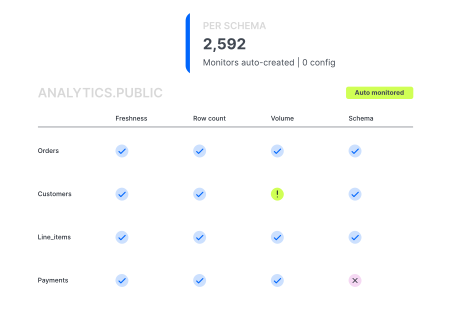
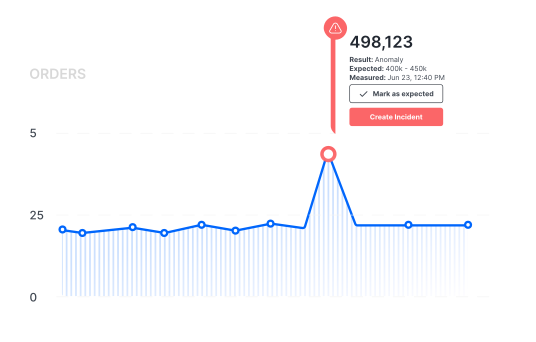
Yes. Matia's data observability is built directly into its ingestion and reverse ETL pipelines rather than added as a separate product. Data teams can monitor pipeline health, schema changes, and data-quality anomalies at the table and column level in the same platform where data is moving, without needing to cross-reference a separate monitoring tool.
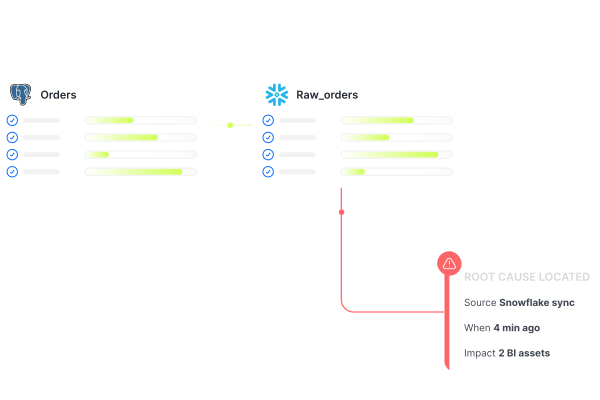
Yes. Matia's data catalog centralizes metadata management, asset connections, and data lineage mapping at the table and column level. Because it is connected to the same ETL and reverse ETL pipelines that move your data, Matia provides an end-to-end lineage view from source through the warehouse to activation, rather than a partial picture stitched together after the fact.
Matia is designed to work alongside dbt, not replace it. Matia handles ingestion, reverse ETL, observability, and cataloging while dbt manages transformation. Matia's observability extends into dbt runs, tracking errors, lineage, and schema.yml changes, and it can trigger automatic GitHub pull-request updates when a schema change affects a dbt model. The goal is to fit into the data workflows teams already use, not force a rebuild.
.svg)
.svg)
.svg)
.svg)


